
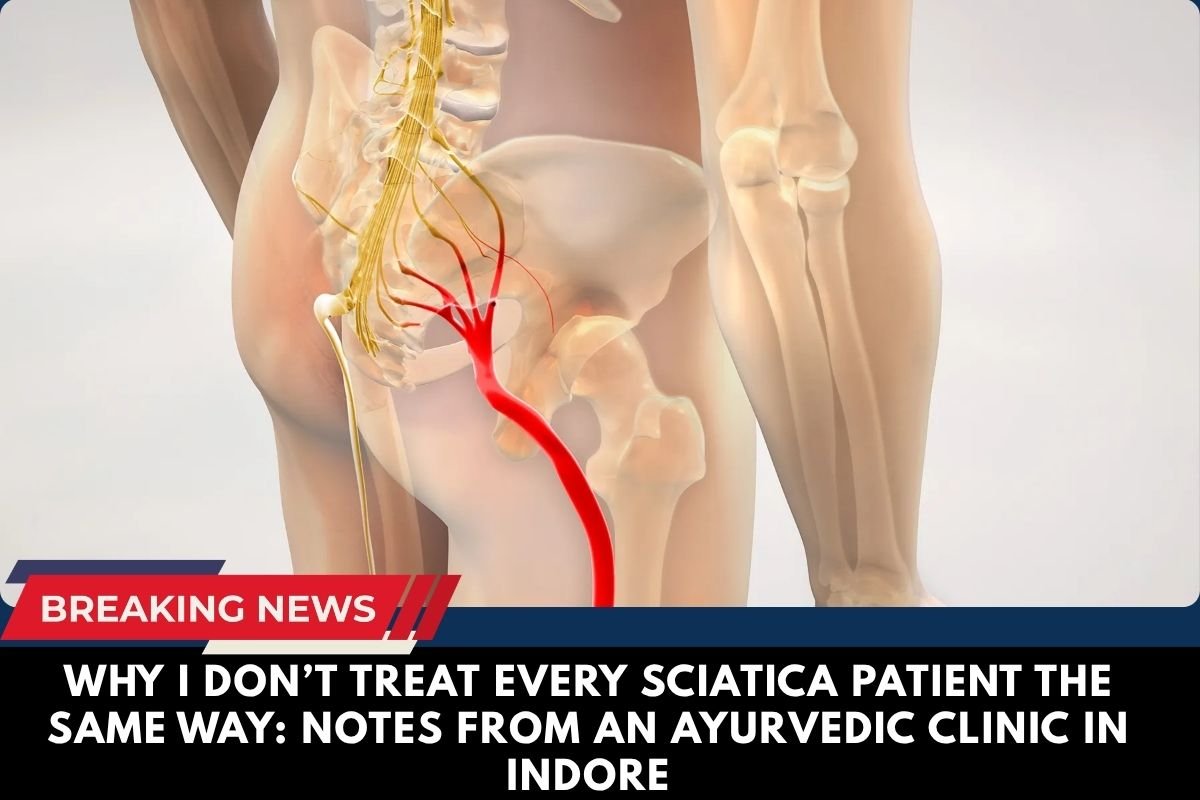
Why I Don’t Treat Every Sciatica Patient the Same Way: Notes From an Ayurvedic Clinic in Indore
By Dr. Chaitanya Gupta, B.A.M.S.
A 36-year-old man walked into my clinic in Vijay Nagar a few weeks ago, and “walked” is generous. He was limping. For about two weeks, pain running down his leg had made standing and walking difficult. Ayurveda was not his idea. His sister had been telling him to come for days, and he finally gave in.
I hear versions of this story often. Many sciatica patients come to Ayurveda last, after painkillers, rest and waiting it out. By then the pain is no longer just pain. It has started taking away basic things like walking to the gate or standing in a queue.
His case went well. But I want to explain how I approach a patient like him, because the reasoning matters more than the result.
Day one is about one question: can Panchakarma help this case at all?
Before any therapy, I take a full history and examine the patient. Sciatica is a description of where the pain travels, along the sciatic nerve. It is not a single disease with a single treatment.
Some cases can be managed here as the primary plan. Some can only be supported alongside other medical care. Some need a medical or surgical opinion first. That applies especially when there is progressive weakness in the leg, numbness in the saddle area, or any change in bladder or bowel control. Those patients should not be waiting for a course of therapy, and I tell them so on the first day.
This young man’s presentation was one we could work with.
Why a combination, and not one “sciatica therapy”
For him, I planned a seven-day programme of about three hours at the clinic each day:
- Abhyanga, a warm medicated oil massage
- Swedana, therapeutic sweating
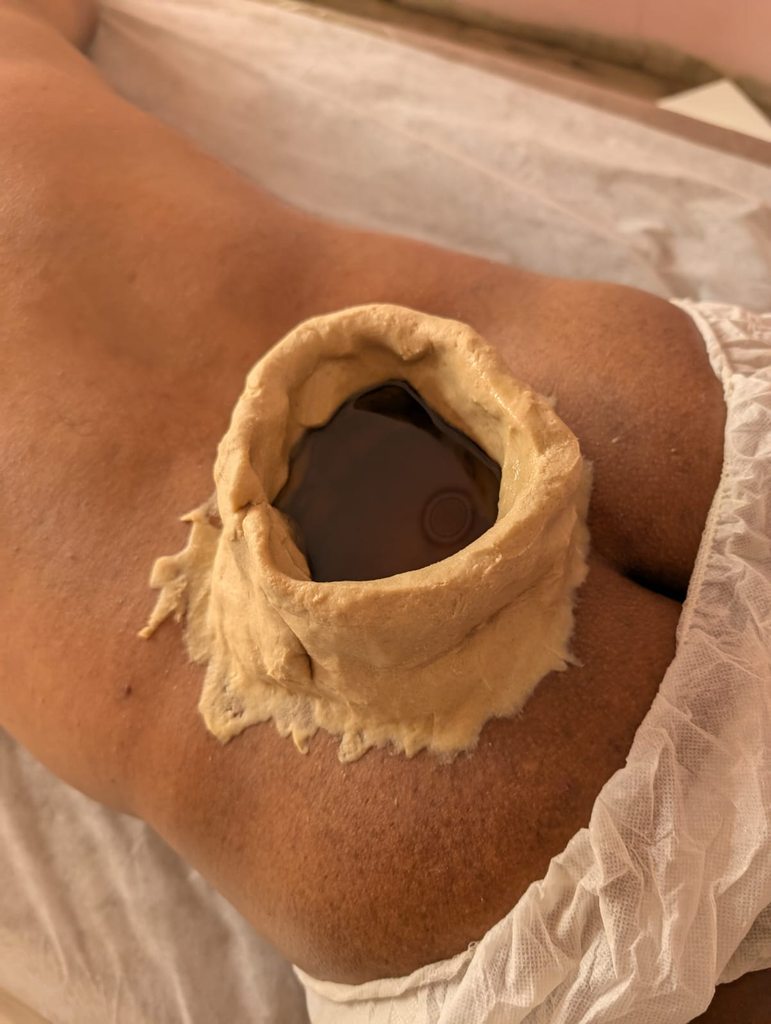
- Kati Basti, where warm medicated oil is held over the lower back inside a ring of dough
- Agnikarma, a classical heat procedure from the Sushruta tradition, used for localised, stubborn pain
- Internal medicines selected for him
I don’t name the medicines, deliberately. They were chosen for his body and his presentation. Copying them from an article is not safe.
None of these procedures is “the” treatment on its own. Each is one part of a plan. Another sciatica patient might need a different combination, a shorter course of three or four sittings, or a longer one of fourteen days. Severity and examination decide that, not a fixed package.
What I watch: function, not just pain
Pain scores matter. But the first thing I noticed about this patient was his walk, so his walk was what I tracked.
By the second day, he reported that the pain had eased noticeably and he was moving more comfortably. We continued the full seven days anyway. Feeling better on day two is not the same as being done.
On the last day, the limp he had walked in with was gone. He could stand and walk normally without the earlier pain. Before leaving, he said, a little surprised, that he hadn’t known Ayurveda could work this fast, and that he wouldn’t have come at all if his sister hadn’t pushed him.
I have written up the complete seven-day sciatica case, including how his symptoms changed day by day, on our clinic’s website.
One patient is one patient
I share cases like this because they show what careful, individual Ayurvedic care can look like. I also say clearly that his speed of recovery belonged to him. Every sciatica patient does not respond the same way or in the same time, and no honest physician can promise a result.
If you have sciatica, here is my advice:
- Get properly examined. Don’t treat leg pain from a forwarded message.
- Seek medical help quickly if you notice weakness, numbness, or bladder or bowel changes.
- If you try Ayurveda, choose a registered physician who explains what they are doing and why, and who is willing to tell you when Ayurveda is not the right first step.
Dr. Chaitanya Gupta, B.A.M.S., is a registered Ayurvedic physician (M.P. Ayurveda Board, Reg. No. 56576) focusing on Panchakarma and Raktamokshana. He practises at Ayurveda Gokulam, a Panchakarma centre in Vijay Nagar, Indore.
This article is for general information and is not a diagnosis. Individual results vary.